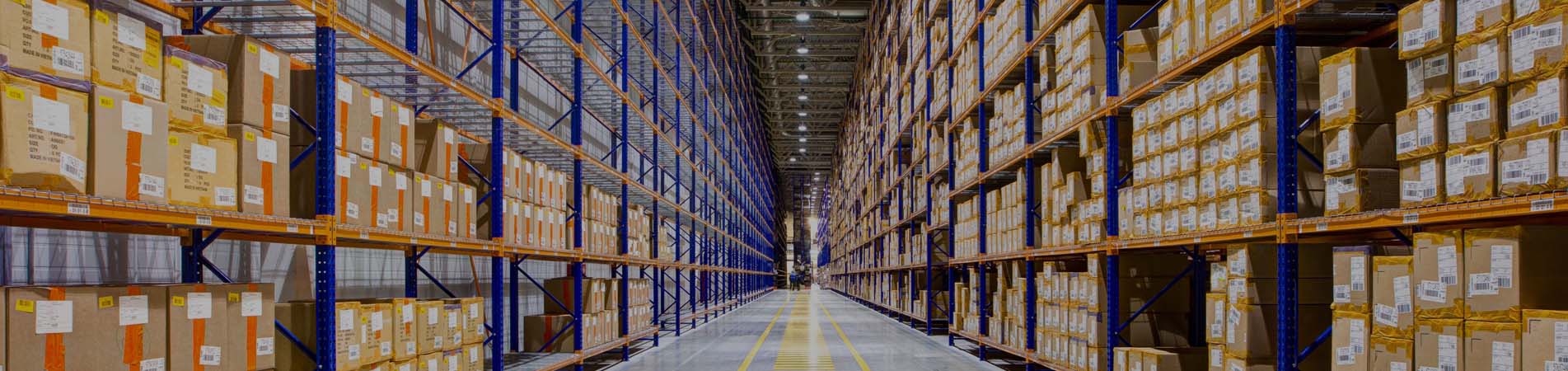
When you design a Pallet Racking In Warehouse, picking efficiency and load capacity is the role of warehouse racking design. That includes two section: stuff access or forklift access. In this guide, we will tell you how to choose the high picking efficiency High-Throughput Pallet Racks racking system. Follow our guidelines.
Understand the High-Throughput of pallet racking
In warehouse and industrial storage environments, the concept of pallet racks that you can run stuff through the middle refers to pallet racking systems specifically designed to support high throughput. The Flow Through that allows goods move easily through the storage lanes without unnecessary handling or obstruction.
Key Feature:
Especially valuable for operations requiring:
Fast-moving inventory rotation
FIFO (First In, First Out) or LIFO (Last In, First Out) systems
Reduction of forklift travel distance
Optimized labor usage
Pallet Racks with Throughput Capabilities
Certain pallet racking designs are engineered to facilitate product movement directly through storage lanes. These systems typically feature integrated rollers, shuttles, or inclined lanes to enable smooth product flow without manual repositioning.
Common Types Include:
Pallet Flow Racking (FIFO)
Push-Back Racking (LIFO)
Drive-Through and Drive-In Racking
Pallet Shuttle Racking Systems
Each offers different advantages based on load type, warehouse layout, and operational priorities.
Types of Pallet Racking That Support Throughput
Type
Flow Direction
FIFO/LIFO
Load Capacity
Best Application
Pallet Flow Racking
One-way
FIFO
Medium–High
Cold storage, food, high turnover goods
Push-Back Racking
One-way
LIFO
Medium
Retail warehouses, mixed SKU storage
Drive-In Racking
Two-way
LIFO
High
Bulk storage, few SKUs
Drive-Through Racking
Two-way
FIFO
High
High-turnover bulk items
Pallet Shuttle Racking
One-way or two-way
FIFO/LIFO
High
Large volume, automated storage
Application of high throughput pallet racking
High-throughput pallet racks are essential in industries where efficiency and inventory turnover are key.
Common Application
Cold Storage Facilities: For perishable goods where FIFO is critical.
E-Commerce Fulfillment Centers: High-volume SKU management and rapid order processing.
Retail Distribution Warehouses: Fast inventory rotation and minimal storage delays.
Automotive and Industrial Parts Warehousing: Storing large, heavy items with smooth flow capability.
Food and Beverage Storage: Ensuring product freshness and regulatory compliance through FIFO storage.
Why Choose High-Throughput Pallet Racks
Choosing pallet racks that allow products to move through the middle offers several advantages:
Maximized Storage Efficiency: Improved space utilization both vertically and horizontally.
Increased Picking Speed: Faster product retrieval and loading processes.
Reduced Labor Costs: Less manual handling and shorter forklift travel distances.
Inventory Accuracy: Better stock control and organization.
Enhanced Safety: Minimizes congestion and reduces the risk of product damage or operator injury.
Tips for Choosing High-Throughput Pallet Racks
Selecting the right high-throughput pallet racking system requires a balance of operational needs, space constraints, and budget considerations. Here are key factors to guide your decision:
1. Define Your Inventory Flow Requirements
FIFO or LIFO: Determine if your inventory needs First In, First Out (FIFO) or Last In, First Out (LIFO) management.
Product Turnover Rate: High-turnover items may need pallet flow racks, while slower-moving bulk items might suit drive-in racks.
2. Assess Load Capacity and Pallet Specifications
Weight per Pallet: Confirm the system’s load capacity matches your heaviest pallets.
Pallet Size and Type: Ensure compatibility with standard or custom pallet dimensions used in your facility.
3. Evaluate Available Space and Layout
Aisle Width and Ceiling Height: Maximize vertical storage if floor space is limited.
Rack Depth and Lane Length: Deeper racks are suitable for bulk storage, while shallower racks work for mixed SKUs.
4. Consider Handling Equipment Compatibility
Ensure the racking system works with your existing forklifts, shuttles, or automated guided vehicles (AGVs).
Check clearances for safe and efficient loading/unloading.
5. Prioritize System Flexibility
Look for adjustable beam heights and modular rack designs to allow future changes as your business grows.
Systems like pallet shuttle racking offer automation-ready features for scalability.
6. Factor in Environmental Conditions
Cold Storage or Outdoor Use: Opt for hot-dipped galvanized finishes for corrosion resistance.
High-Humidity Areas: Choose rust-resistant materials to extend system lifespan.
7. Balance Cost and Value
Weigh the upfront investment against long-term efficiency gains, labor savings, and maintenance costs.
Consider total cost of ownership, not just the initial purchase price.
8. Work with a Professional Supplier
Partner with an experienced racking supplier or manufacturer to receive expert layout advice, safety recommendations, and after-sales support.
Finding High-Throughput Pallet Racking Solution
Investing in the right pallet rack that you can run stuff through the middle depends on a careful assessment of your warehouse’s needs. Custom solutions are often necessary to ensure optimal fit and performance.
If you’re looking for expert guidance or customized pallet racking systems, our team offers tailored solutions—from initial consultation and layout design to manufacturing and installation.
Contact us today to discuss your high-throughput pallet racking project and request a personalized quote.
Designing an efficient and effective storage racking system is paramount for the fast-paced and high-volume nature of the Fast-Moving Consumer Goods (FMCG) industry. A well-designed system can significantly boost operational efficiency, minimize costs, and ensure product quality and safety.
This guide explains how pallet racking works in the FMCG context, its key applications, tips for selecting the right system, and where to turn for expert guidance.
How Pallet Racking Work In FMCG
Pallet racking is a material storage system designed to store palletized products in horizontal rows with multiple levels. For the FMCG industry, its function goes beyond simple storage; it's an active part of the daily workflow designed for rapid movement.
Receiving: Goods arrive from manufacturers on pallets. These are unloaded and staged for put-away.
Put-Away: Forklifts or other Material Handling Equipment (MHE) lift the pallets and place them into a designated slot in the racking system. The location is determined by the Warehouse Management System (WMS), which considers factors like product type, expiry date, and picking frequency.
Storage: Pallets are held in the racking system. The type of racking dictates how they are stored—whether in a high-density block or a more accessible single-pallet bay. Crucially for FMCG, this is often a short-term phase.
Replenishment & Picking: As orders come in, full pallets may be moved to a forward picking area, or individual cases are picked directly from the pallet in the rack. For high-volume orders, the entire pallet is retrieved.
Dispatch: Retrieved pallets are staged, checked, stretch-wrapped if necessary, and loaded onto outbound trucks for delivery to retailers, distribution centers, or customers.
Application of Pallet Racking in the FMCG Industry
Racking Type
Primary Application in FMCG
Key Benefits
Selective Racking
Storing a wide variety of SKUs with lower pallet counts per SKU. Ideal for products with diverse packaging and slower turnover rates.
• Direct access to every pallet• Cost-effective & versatile• Easily adjustable for different product heights
Pallet Flow Racking (Gravity Flow)
Crucial for date-sensitive goods like dairy, produce, and beverages. Perfect for high-volume, full-pallet picking.
• Guarantees First-In, First-Out (FIFO)• High-density storage• Separates loading and picking aisles for efficiency
Drive-In / Drive-Thru Racking
Storing large quantities of the same SKU, such as canned goods or seasonal items where stock is depleted in bulk.
• Excellent storage density, maximizing floor space• Cost-effective high-density solution• Drive-Thru can be configured for FIFO
Push-Back Racking
For medium-turnover products where density is important but FIFO is less critical than in Pallet Flow. Good for bulk goods and beverages.
• Higher density than selective racking• Faster picking than Drive-In• Good space utilization
Pallet Shuttle Racking
High-density storage for high-turnover SKUs. Often used in cold storage or ambient warehouses where space is at a premium.
• Semi-automated speed and efficiency• Maximum density• Can be configured for FIFO or LIFO
Adjustable & Mobile Racking (MOVO)
In temperature-controlled environments or for high-value goods where maximizing every cubic meter is essential.
• The ultimate space-saving solution• Provides 100% access in a high-density format
Tips for choose right pallet racking in FMCG Industry
Prioritize Inventory Rotation (FIFO/LIFO): For perishable goods, a First-In, First-Out (FIFO) system like Pallet Flow is essential to minimize spoilage. For non-perishable, high-volume items, a Last-In, First-Out (LIFO) system like Drive-In or Push-Back can offer greater density.
Analyze Product Characteristics: Evaluate your entire product range. Consider the number of SKUs, the number of pallets per SKU, pallet dimensions and weight, and any special handling requirements (e.g., cold storage). A warehouse often needs a mix of racking types.
Calculate Your Desired Storage Density: How much product do you need to fit into your available space? High-density systems like Drive-In or Pallet Shuttle reduce aisle space and maximize storage, but may limit direct access to every pallet.
Plan for Throughput and Scalability: How quickly do goods need to move through your warehouse? Your racking system must support your required picking and replenishment speeds. Furthermore, choose a modular system that can be expanded or reconfigured to adapt to future growth and changes in your product mix.
Get Expert Help For your FMCG Warehouse
So, if you’re wondering set a NEW WAREHOUSE/ UPGARDE YOUR FMCG WAREHOUSE, this guide has covered it all. The correct timing for window replacement remains essential for preserving home energy efficiency together with comfort and overall health conditions.
HEDA SHELVES provides various type of racking system and design in FMCG storage solutions that unite aesthetics with durability alongside practicality. Get Free Quote Now.
Are you looking for a way to enhance your warehouse capacity in a flexible solution? Well, the mezznine floor is what you need. It can increase your picking eifficiency, such as cartons, accessories, case, etc., from thieves and help you increase capacity and storage operation efficiency. So, let’s look at its advantages that will quicken your decisions.
List of the 9 Benefits Of Owning a Mezzanine Flooring in Your Warehouse
Maximize Vertical Space
Cost-Effective Expansion
Versatile Usage Options
Quick Installation
Improved Workflow and Organization
Customizable to Your Needs
Increased Property Value
Adapted to Business Growth
9 Benefits Of Owning Mezzanine Flooring in Your Warehouse
Maximize Vertical Space
Instead of expanding outward, expand upward. Mezzanine flooring allows you to utilize previously unused vertical space, especially in high-ceiling warehouses. It’s like unlocking a whole new level of productivity—without changing your footprint.
Cost-Effective Expansion
Need more space but don’t want to commit to a new building lease or costly construction? A mezzanine floor provides a significantly cheaper alternative to relocation or expansion, saving you both time and money.
Versatile Usage Options
Whether you need additional storage, office space, production zones, or packing areas, a mezzanine can be tailored to meet a wide variety of needs. It’s a flexible solution that grows with your business.
Quick Installation
Time is money. One of the most overlooked advantages of mezzanine floors is how quickly they can be installed compared to traditional construction. Depending on the size, some systems can be operational within days, not weeks.
Improves Workflow and Efficiency
By creating additional space, mezzanines allow for better organization and separation of functions (e.g., storage above, production below), which can streamline workflows and reduce product handling times.
Flexible and Bespoke Design
Mezzanines can be custom-designed to fit your specific needs and warehouse layout, including accommodating machinery, offices, meeting rooms, or specialized production areas. They can be adapted or expanded as your business evolves.
Customizable to Your Needs
Mezzanine systems can be designed to fit your warehouse’s unique dimensions and load requirements. You can customize features such as staircases, railings, lighting, and flooring materials to optimize safety and functionality.
Increased Property Value
Adding mezzanine flooring enhances the overall value of your warehouse property. The increased usable space makes your facility more attractive to future buyers or tenants, providing a strong return on investment.
Enhanced Safety and Employee Operation
Creating dedicated zones on mezzanine levels can reduce floor congestion and forklift traffic, improving workplace safety. Additionally, mezzanines can house employee facilities such as break rooms or offices, boosting comfort and productivity.
Best Mezzanine Floor For Warehouse Racking Manufacturer in China
HEDA Shelves has grown from its humble beginnings in 2001 offers high quality warehouse storage mezzanine that spans several industries. The dependable supply chain, many high-quality factories with racking & shelves process lines, and supported marketing resources of HEDA SHELVES all work together to provide the global market with OEM&ODM Mezzanine Floor Solution
Some of the products manufactured by the HEDA SHELVES include:
Pallet Racking System
Drive-in Racking
Carton Flow Racking
Mezzanine Racking
Radio Shuttle Racking
If you finding cost-efficiency mezzanine floor solution contact us today.
What is a Pallet Rack That You Can Run Stuff Through the Middle?
A "pallet rack that you can run stuff through the middle" refers to dynamic racking systems engineered to facilitate the continuous movement of goods within the rack structure. Unlike static racking, where pallets are manually loaded and retrieved, dynamic racks use gravity, rollers, or mechanical systems to move pallets from one side of the rack to the other.
This design supports First-In, First-Out (FIFO) or Last-In, First-Out (LIFO) inventory management, making it ideal for high-throughput environments like distribution centers and wholesale warehouses.
These systems are particularly valuable for businesses handling perishable goods, high-turnover inventory, or bulk wholesale orders. By enabling goods to "flow" through the rack, they reduce handling time, minimize bottlenecks, and optimize warehouse space. To learn more about how racking systems integrate with warehouse layouts, explore our Warehouse Design Solutions.
Types of Pallet Racking That Support Throughput
Through racking systems operate by allowing pallets to move through the rack structure, either by forklift entry or gravity-assisted mechanisms. Here are any types dynamic racking system for high-density and high efficiency storage rack system.
Drive-In Racking
Drive-in racking allows forklifts to drive directly into the rack structure, accessing pallets stored deep within. This LIFO system is ideal for bulk storage of similar products, maximizing space by eliminating aisles. It’s perfect for wholesalers with large quantities of uniform inventory.
Pallet Flow Racking
Pallet flow racking uses gravity-fed rollers to move pallets from the loading end to the picking end, supporting FIFO inventory management. This system is suited for high-turnover goods like food, beverages, or pharmaceuticals, ensuring older stock is accessed first.
Push-Back Racking
Push-back racking employs carts on inclined rails, allowing pallets to be loaded from the front and pushed back as new pallets are added. This LIFO system offers high-density storage with better selectivity than drive-in racking, making it ideal for diverse wholesale inventories.
Shuttle Racking
Shuttle racking is a type of ASRS System, uses semi-automatic racking system to move pallets from the loading end to the picking end, supporting FIFO inventory management. This system is suited for high-turnover goods like food, beverages, or pharmaceuticals, ensuring older stock is accessed first. You can update automated shuttle carts move pallets through lanes for loading/unloading.
Type
Description
Inventory Flow
Ideal Use Cases
Drive-In Racking
Forklifts enter rack lanes to load/unload pallets; supports large volumes of homogeneous goods
LIFO
Food & beverage, bulk storage
Drive-Through Racking
Similar to drive-in but allows forklifts to enter from both ends; supports FIFO
FIFO
Buffer storage, production-dispatch flow
Pallet Flow Racking
Gravity-driven rollers allow pallets to slide through channels from loading to unloading side
FIFO
Fast turnover items, cold chain storage
Push Back Racking
Nested carts on rails allow multiple pallets per level, pushed back by loading new pallets
LIFO
Medium to high SKU variety, dense storage
Shuttle Racking
Automated shuttle carts move pallets through lanes for loading/unloading
FIFO/LIFO
Automated warehouses, high throughput
Benefits of High-Density Dynamic Racks
High-density pallet racking systems offer significant advantages for warehouses aiming to optimize space and improve operational efficiency. Their key benefits include:
Maximum Space Utilization
High-density racks reduce the number of aisles needed by storing pallets more compactly, often by stacking pallets depth-wise or using mobile systems. This allows warehouses to store more products within the same footprint, effectively increasing storage capacity without expanding the physical space. For example, drive-in racks can increase storage capacity by up to 75% compared to traditional selective racks.
Efficient Inventory Management
These systems support organized inventory flow methods such as FIFO (First In, First Out) or LIFO (Last In, First Out), depending on the rack type. Gravity-driven pallet flow racks enable FIFO, which is crucial for perishable goods, while drive-in racks often operate on LIFO. Efficient inventory rotation improves stock turnover and reduces waste.
Lower Operating Costs
By maximizing storage density, especially in temperature-controlled environments like cold storage, high-density racks reduce the total refrigerated volume, leading to energy savings. Additionally, fewer aisles mean less lighting and heating costs. Labor costs can also decrease due to reduced travel time for forklifts and streamlined picking processes.
Improved Warehouse Throughput and Productivity
With better space utilization and optimized pallet flow, workers spend less time locating and retrieving goods. Systems like pallet shuttles or push-back racks reduce manual handling and speed up loading/unloading operations. This leads to faster order fulfillment and higher throughput.
Enhanced Safety and Organization
High-density racking systems promote a cleaner, more organized warehouse layout. Clear aisles and designated storage reduce clutter and hazards, improving worker safety. Some advanced systems, such as mobile racking, include safety features like obstacle detection and controlled movement to prevent accidents.
Scalability and Flexibility
Many high-density systems can be customized or expanded to fit changing inventory needs. They accommodate various pallet sizes and product types, making them suitable for diverse industries including food and beverage, pharmaceuticals, automotive, and e-commerce
Conclusion
Uncertain about adopting a dynamic racking system? Explore our informative videos to better understand your options. To maximize your storage efficiency, contact Heda Shelves Expert for a free design consultation.
Since 2001, HEDA Shelves has expertly designed, managed, and installed pallet flow, carton flow, and push-back systems across various industries. No matter the project size, our expertise ensures your success.
Efficiency is the cornerstone of effective warehouse storage, so optimizing your storage facility is critical. As inventory levels rise, it may be necessary to update your pallet racking system. Whether you are relocating your warehouse or reconfiguring your existing layout, dismantling your pallet racking is a crucial first step.
How can you safely update your storage equipment? In order to better manage your space, knowing the proper way to dismantle pallet racking can help keep you safe and efficient during the transition.
Disassemble Pallet Rack in 5 Easy Steps
Remove Wire Decking and Accessories
Begin by taking off all wire decking and any additional accessories, such as post protectors and shelf dividers. This step clears the way for accessing the beams and uprights more easily. When stacking the wire decking, alternate the orientation (face up and face down) for compact storage.
Take Down the Beams
Next, remove the horizontal beams that connect the uprights. It’s important to follow the manufacturer's instructions for your specific type of pallet rack. If the rack is tall, consider leaving one beam level intact until the uprights are ready to be removed for added stability.
Lower the Uprights
After the beams are removed, focus on the uprights. First, take off any washers and nuts securing the uprights to the concrete. Depending on how the uprights were installed, you may need to hammer the anchors down into the concrete or lift the uprights over them. Once detached, lay the uprights on their sides in a safe area.
Remove Anchors
With the uprights down, remove the anchors that are left protruding from the concrete floor. This can be done by hammering them down or cutting and grinding them flush with the floor. To maintain the integrity of the floor, fill any holes left behind with concrete or epoxy sealant.
Bundle Components
Finally, if you plan to sell or relocate the pallet rack components, bundle the uprights, beams, and wire decking tightly. Use heavy-duty steel strapping to secure the bundles, ensuring they are uniform and won’t shift during transport
As a leading pallet racking manufacturer, we are committed to helping you maintain your racking systems with expert advice, high-quality products, and exceptional customer service. For more information on racking maintenance or to discuss your specific needs, contact us today.