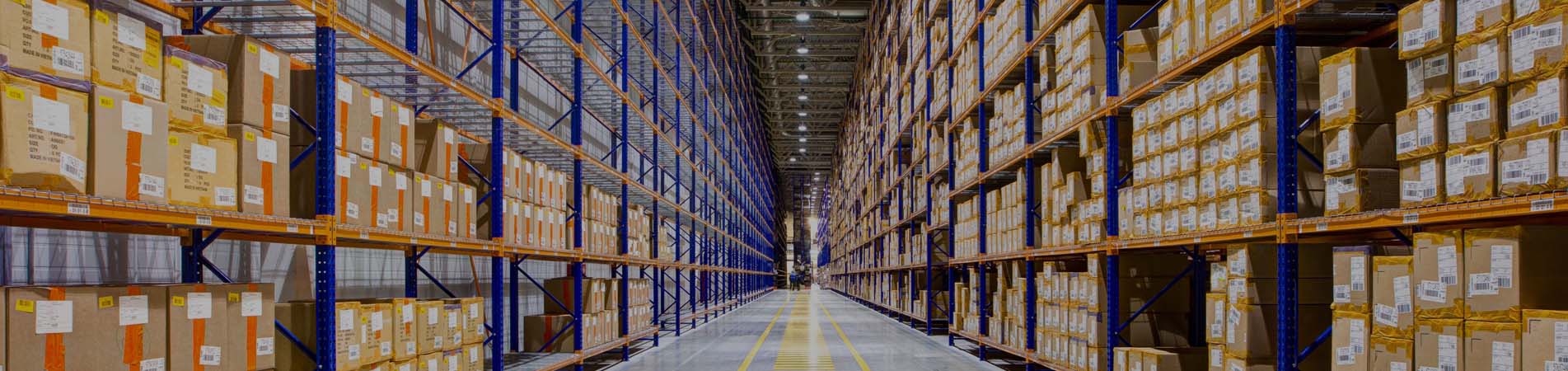
The pallet racking system is the esstential storage equipment of almost every modern warehouse. It is the critical equipment used to maximize storage space and streamline warehouse management. But there is one question that keeps warehouse managers up at night: "Is it safe? How much weight can this rack actually hold?"
With over 20 years of racking project experience at HEDA SHELVES, we have seen it all—from light retail storage to massive industrial distribution centers. Generally speaking, a standard industrial pallet rack system is designed with a load capacity of around 3-5 tons per layer, depending on the configuration. However, guessing is not an option when safety is on the line.
In this article, we will provide a thorough understanding of pallet racking weight capacity, offer solutions for accurate calculations, and share a real-world case study from our portfolio.
Key Takeaways
Standard Capacity: Common heavy-duty pallet racking can hold up to 5 tons per layer with the right specifications.
High-Density Limits: High-density systems (like Shuttle or Flow racks) often optimize for 1-3 tons per layer/position to balance automation and stress.
Critical Factors: The strength of the beams and upright frames is the biggest factor affecting capacity.
Safety First: Never store products beyond the beam’s maximum rated capacity.
Understanding Pallet Rack Weight Capacity
When we talk about "capacity," we are actually talking about two different ratings that work together. As experts, we encourage you to distinguish between them:
Beam Capacity (Per Layer): This is the maximum weight a pair of beams can hold. For example, if you have two pallets weighing 1500kg each sitting on one level, your beam capacity must be at least 3000kg.
Upright Frame Capacity (Total Bay): This is the total weight the vertical frames can support. This includes the weight of all the layers combined.
Expert Note: Most rack damage case failures happen not because the steel wasn't strong enough, but because the weight was unevenly distributed. Always ensure your loads are uniformly distributed (UDL).
Factors That Determine Pallet Rack Capacity
Why can one rack hold 1000kg and another hold 5000kg? It comes down to engineering.
Beam Profile and Plate Thickness
As the horizontal components directly bearing loads, common beam types include box beams and ladder beams. Beam thickness and profile cross-section determine load-bearing capacity. Deeper cross-sections and thicker, stronger beams enhance load capacity and durability.
At HEDA, we focus on two aspects:
Profile Height: Refers to the vertical height of the beam face (e.g., 100mm, 120mm, or 160mm). Higher beam profile height strengthens the bridge structure's bending resistance and reduces deformation under pressure.
Thickness (Specification): Manufactured from high-strength steel, standard thickness ranges from 1.5mm to 2.0mm. Each 0.5mm increase in steel thickness significantly boosts load capacity and torsional strength.
When selecting a shelving system, prioritize beam specifications, as these parameters directly determine the load-bearing capacity of pallet rack beams.
Upright Frame Construction
The upright frames take the total vertical load of the entire bay and transfer it to the floor.
Column Size: Common sizes like 80x60mm, 90x70mm, or 100x70mm determine how much total weight the bay can hold.
Vertical Beam Spacing: This is a "hidden" factor. If your first beam level is 2 meters high, the upright has a long "unsupported span," which reduces its capacity. Adding a beam level actually makes the frame more stable by reducing this span.
Beam Span (Length)
With Our 20 years experience in racking system design, the beam span limited in 3m can balance the pallet postion and load capacity. As the span (the distance between the two uprights) increases, the capacity of the beam decreases.
For example, a 120mm beam might hold 3,000kg at a 2,300mm length, but that same beam may only safely hold 2,000kg if stretched to a 3,300mm length.
Types of Pallet Racks and Their Weight Capacities
Different types of pallet racks are engineered for specific weight capacities and operational purposes. Selecting the correct system based on your load requirements is critical for maintaining structural safety and maximizing warehouse efficiency.
Selective Pallet Racking
Selective pallet racks are the most widely used systems and are designed to handle medium to heavy-duty industrial loads. At HEDA SHELVES, we engineer these to support between 1,000kg to 5,000kg per level, making them highly versatile for most industries.
Best For: Warehouses requiring 100% accessibility to every pallet and frequent stock rotation (FIFO).
Capacity Insight: The capacity is easily adjusted by selecting different beam profiles (from 100mm up to 160mm).
Double Deep Racking
Double deep racking is a high-density variation of selective racking that stores pallets two-deep. Because it holds two pallets per lane per level, the beam strength is paramount.
Capacity: Typically supports up to 5,000kg per layer.
Best For: Businesses looking to increase storage density by 30-40% using a LIFO (Last-In, First-Out) operation.
Drive-In and Drive-Through Racks
These are high-density storage solutions where forklifts enter the racking structure itself. Instead of beams, they use rails to support the pallets.
Capacity: These systems are built for heavy-duty bulk storage, often exceeding 1,500kg per pallet position.
Best For: Large quantities of the same SKU where pallets are stacked several levels high and deep.
Cantilever Racks
Cantilever racks feature a specialized design with arms extending from a central column, specifically for items that don't fit on standard pallets.
Capacity: Depending on the arm length and gauge, they can hold 1,000kg to 3,000kg per pair of arms.
Best For: Long or bulky items such as timber, steel pipes, and furniture.
Radio Shuttle Racking
This semi-automatic high-density system uses a robotic shuttle to carry loads through the deep lanes of the rack.
Capacity: Most shuttles are rated for 1,000kg to 1,500kg per pallet.
Best For: Cold storage and FMCG (Fast-Moving Consumer Goods) where high speed and maximum space utilization are required.
Gravity Flow Racking
Also known as "Live Storage," these racks use inclined rollers to move pallets from the loading side to the picking side via gravity.
Capacity: Generally holds 1,000kg to 3,000kg per layer.
Best For: Perishable goods and high-volume picking environments that require strict FIFO rotation.
Common Pallet Racking Beams Maximum Load Capacity (Basic on HEDA SHELVES Standard)
Single Beam
No.
Type
Section Size (H×B, mm)
1000
1500
2000
2300
2500
2700
3000
3300
3500
3800
4000
Unfolded Width (mm)
1
Single Beam
80×45×1.5
2918
1946
1459
1173
993
851
690
570
507
430
388
290
2
Single Beam
100×45×1.5
4160
2773
2080
1809
1560
1337
1083
895
796
675
609
330
3
Single Beam
120×45×1.5
6454
4303
3227
2825
2391
2050
1661
1372
1220
1035
934
370
4
Single Beam
140×45×1.5
7959
5306
3980
3461
3184
2950
2389
1975
1755
1489
1344
410
5
Single Beam
160×45×1.5
9566
6377
4783
4159
3826
3543
3189
2712
2411
2045
1846
450
No.
Type
Section Size (H×B, mm)
1000
1500
2000
2300
2500
2700
3000
3300
3500
3800
4000
1
Reinforced Double Beam
80+80
10355
6903
5178
4502
4142
3835
3452
2921
2597
2203
1988
2
Reinforced Double Beam
100+80
12268
8179
6134
5334
4907
4544
4089
2718
3461
2936
2650
3
Reinforced Double Beam
100+100
14143
9429
7071
6149
5657
5238
4714
4286
4041
3722
3394
4
Reinforced Double Beam
120+100
16263
10842
8131
7071
6505
6023
5421
4928
4647
4280
4066
5
Reinforced Double Beam
120+120
18366
12244
9183
7985
7347
6802
6122
5566
5248
4833
4592
6
Reinforced Double Beam
140+120
20695
13797
10348
8998
8278
7665
6898
6271
5913
5446
5174
7
Reinforced Double Beam
140+140
23024
15349
11512
10010
9210
8527
7675
6977
6578
6059
5756
8
Reinforced Double Beam
160+140
25563
17042
12782
11114
10225
9468
8521
7746
7304
6727
6391
9
Reinforced Double Beam
160+160
28114
18743
14057
12224
11246
10413
9371
8520
8033
7399
7029
No.
Type
Section Size (H×B, mm)
1000
1500
2000
2300
2500
2700
3000
3300
3500
3800
4000
Unfolded Width (mm)
1
Square Beam
80×45×1.5
1829
1219
914
735
622
533
432
357
317
269
243
250
2
Square Beam
100×45×1.5
2688
1792
1344
1169
1008
864
700
578
514
436
394
290
3
Square Beam
120×45×1.5
4298
2866
2149
1869
1593
1365
1106
914
813
689
622
330
4
Square Beam
140×45×1.5
4521
3014
2260
1965
1808
1675
1357
1121
997
846
763
370
Case Study: Heavy Duty Racking in Panama
Client Challenge: A large logistics center in Panama needed to store heavy industrial machinery parts. They required a system that could handle extreme weight loads while remaining stable in a seismically active region.
HEDA Solution: We engineered a custom Heavy Duty Selective Racking System.
Specs: We utilized our 160mm Integrated Beams to achieve a reliable load capacity of 3.5 tons per layer at a 2700mm beam length.
Safety: We installed column guards and frame protectors to prevent forklift damage.
Result: The client maximized their vertical space safely, holding heavy machinery parts that standard racks couldn't support.
Looking for Pallet Racking?
If you’re looking for pallet racking in your warehouse, HEDA SHELVES has got you covered!
From pallet racking design to on-site installation support, we offer OEM/ODM shelving and racking solutions available to suit your business needs. As shown in our data above, we engineer racks for everything from light storage to super-heavy industrial loads.
Got any questions about our products? Contact our friendly team today who will be happy to assist you with your enquiry!
FAQs
Q: How do I calculate the weight of my pallets?
A: Weigh your heaviest pallet load (product + pallet weight). Multiply this by the number of pallets per beam level. Your beam capacity must exceed this total number.
Q: What happens if I overload a rack?
A: Overloading causes beam deflection (bowing). If the beam bows more than its limit (usually 1/180th of the length), it is structurally compromised and risks collapsing.
Q: Can HEDA Shelves customize the beam length?
A: Yes. While 2300mm, 2500mm, and 2700mm are standard, we can manufacture beams to any specific length (e.g., 1000mm to 4000mm) as shown in our technical capabilities.