what are you looking for?
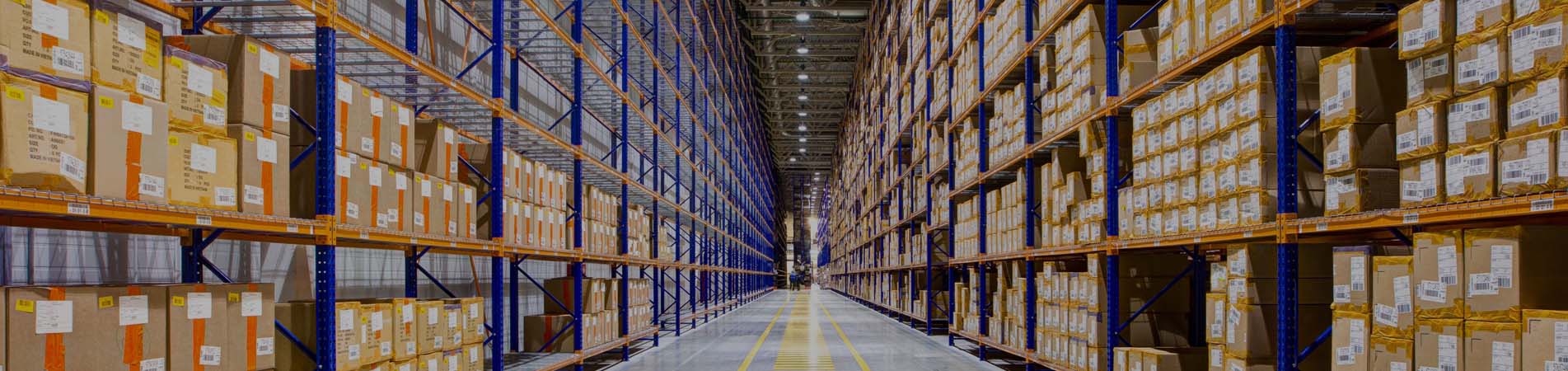
Designing an efficient and effective storage racking system is paramount for the fast-paced and high-volume nature of the Fast-Moving Consumer Goods (FMCG) industry. A well-designed system can significantly boost operational efficiency, minimize costs, and ensure product quality and safety.
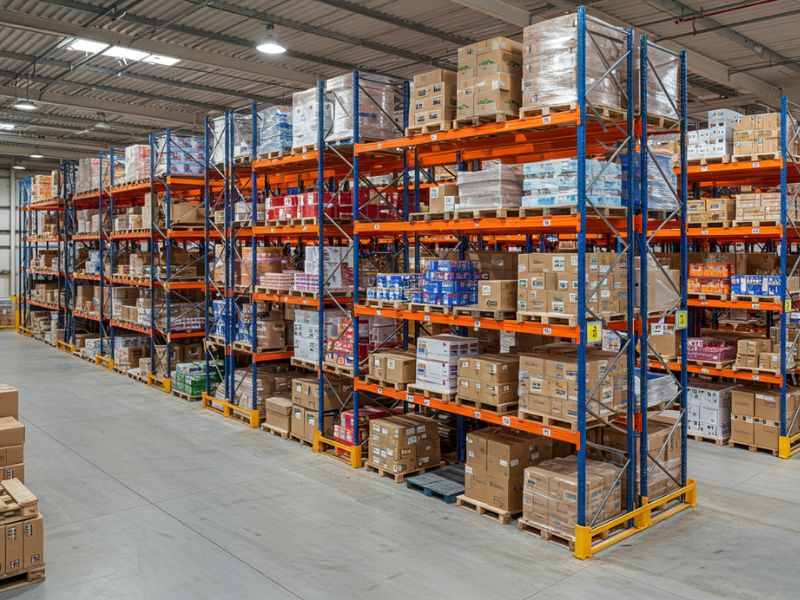
This guide explains how pallet racking works in the FMCG context, its key applications, tips for selecting the right system, and where to turn for expert guidance.
How Pallet Racking Work In FMCG
Pallet racking is a material storage system designed to store palletized products in horizontal rows with multiple levels. For the FMCG industry, its function goes beyond simple storage; it's an active part of the daily workflow designed for rapid movement.
Application of Pallet Racking in the FMCG Industry
| Racking Type | Primary Application in FMCG | Key Benefits |
| Selective Racking | Storing a wide variety of SKUs with lower pallet counts per SKU. Ideal for products with diverse packaging and slower turnover rates. | • Direct access to every pallet• Cost-effective & versatile• Easily adjustable for different product heights |
| Pallet Flow Racking (Gravity Flow) | Crucial for date-sensitive goods like dairy, produce, and beverages. Perfect for high-volume, full-pallet picking. | • Guarantees First-In, First-Out (FIFO)• High-density storage• Separates loading and picking aisles for efficiency |
| Drive-In / Drive-Thru Racking | Storing large quantities of the same SKU, such as canned goods or seasonal items where stock is depleted in bulk. | • Excellent storage density, maximizing floor space• Cost-effective high-density solution• Drive-Thru can be configured for FIFO |
| Push-Back Racking | For medium-turnover products where density is important but FIFO is less critical than in Pallet Flow. Good for bulk goods and beverages. | • Higher density than selective racking• Faster picking than Drive-In• Good space utilization |
| Pallet Shuttle Racking | High-density storage for high-turnover SKUs. Often used in cold storage or ambient warehouses where space is at a premium. | • Semi-automated speed and efficiency• Maximum density• Can be configured for FIFO or LIFO |
| Adjustable & Mobile Racking (MOVO) | In temperature-controlled environments or for high-value goods where maximizing every cubic meter is essential. | • The ultimate space-saving solution• Provides 100% access in a high-density format |
Tips for choose right pallet racking in FMCG Industry
Prioritize Inventory Rotation (FIFO/LIFO): For perishable goods, a First-In, First-Out (FIFO) system like Pallet Flow is essential to minimize spoilage. For non-perishable, high-volume items, a Last-In, First-Out (LIFO) system like Drive-In or Push-Back can offer greater density.
Analyze Product Characteristics: Evaluate your entire product range. Consider the number of SKUs, the number of pallets per SKU, pallet dimensions and weight, and any special handling requirements (e.g., cold storage). A warehouse often needs a mix of racking types.
Calculate Your Desired Storage Density: How much product do you need to fit into your available space? High-density systems like Drive-In or Pallet Shuttle reduce aisle space and maximize storage, but may limit direct access to every pallet.
Plan for Throughput and Scalability: How quickly do goods need to move through your warehouse? Your racking system must support your required picking and replenishment speeds. Furthermore, choose a modular system that can be expanded or reconfigured to adapt to future growth and changes in your product mix.
Get Expert Help For your FMCG Warehouse
So, if you’re wondering set a NEW WAREHOUSE/ UPGARDE YOUR FMCG WAREHOUSE, this guide has covered it all. The correct timing for window replacement remains essential for preserving home energy efficiency together with comfort and overall health conditions.
HEDA SHELVES provides various type of racking system and design in FMCG storage solutions that unite aesthetics with durability alongside practicality. Get Free Quote Now.


Hi! Click one of our members below to chat on