Rising material costs, stricter safety regulations, labour shortages, and relentless pressure on space efficiency mean that what worked in your warehouse three years ago may already be holding your business back.
This guide cuts through the noise. For each of the seven racking trends shaping 2026, we explain what the real-world problem is, what the practical solution looks like, and where relevant how Heda Racking can help you get there faster and more cost-effectively than you might expect.
Is Your Current Racking Still Fit for Purpose?
Before looking at what is new, it is worth asking an honest question about what you already have. Many storage systems in operation today were designed for lighter loads, lower throughput volumes, and far less stringent safety requirements than 2026 demands.
Facts For your project
If any of those questions made you uncomfortable, then at least one of the trends below almost certainly applies directly to your operation. Read on and take notes.
What is driving this?
Warehouse land and lease costs are at record levels in most major industrial markets worldwide. Operators who would previously have taken a bigger building are now being forced to extract more from the building they already have. The most obvious and most cost-effective direction to go is upwards.
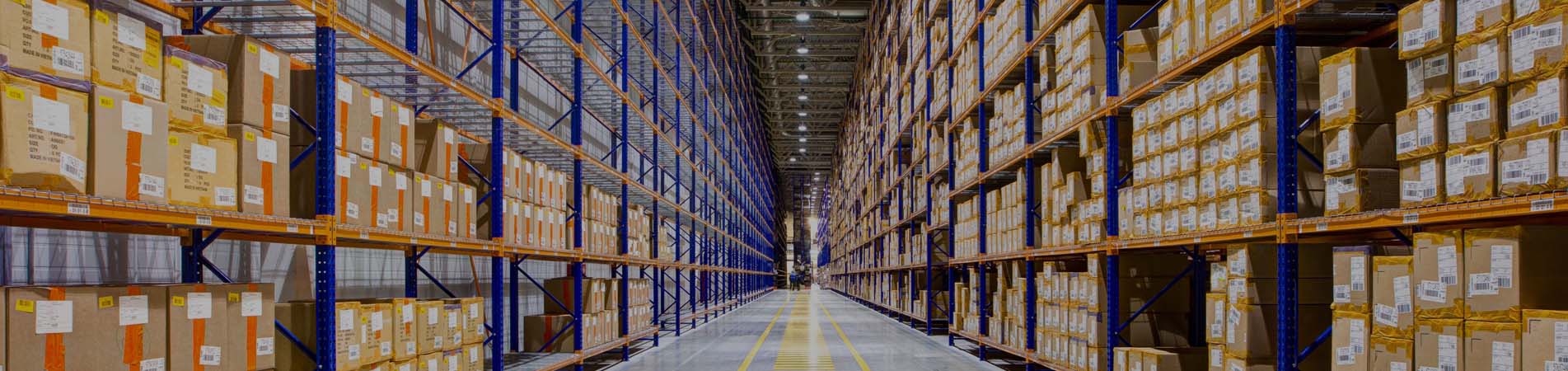
New racking profiles and connection systems in 2026 are allowing significantly higher load capacities at greater heights than systems from even five years ago. High-tensile cold-rolled steel uprights, precision-cut connector clips, and improved diagonal bracing designs mean that the industrial pallet racking system can safely reach 10–12 metres in a standard warehouse where the previous practical ceiling for many operators was 6–8 metres.
7 Racking System Trends For New Warehouse
1.Go Higher — You're Probably Wasting 20% of Your Building
Most warehouses have usable vertical space their racking never reaches. Modern high-tensile uprights now safely reach 10–12 m in standard buildings — where five years ago the practical limit was 6–8 m.
How to do it:
Measure your clear height from floor to the lowest overhead obstruction (sprinkler, beam, duct).
Compare against your current top beam level — if there is more than 1.5 m of unused height, you have an opportunity.
Commission a load assessment before adding any height. An engineer must confirm that existing uprights, floor anchors, and slab can take additional load.
Add beam levels incrementally — you do not need to replace the whole system.
2. Check Your Load Ratings — Before Your Racking Does It For You
Product weights are rising across almost every sector. If your pallet weights have changed since your racking was installed, your rated capacity may no longer be adequate — and progressive overloading causes deformation long before any visible collapse.
How to do it:
Weigh your 10 heaviest pallets and compare against your racking's Safe Working Load (SWL) label.
If you cannot find SWL labels — stop. Missing load notices are a legal compliance failure in most countries.
Check that all beam and upright components are original manufacturer parts. Mixed components invalidate rated capacity.
If loads have increased, get a structural reassessment. Downgrading to a lower rated beam level is far cheaper than a collapse.
3. Set Up a Formal Inspection Routine
Racking safety enforcement is tightening globally in 2026. In the UK, EU, Australia, and the U.S., operators are required to have active, documented inspection programmes not just a one-off installation certificate from years ago.
How to do it:
Appoint a Person Responsible for Rack Safety (PRRS) — a named individual who owns inspections and damage reports.
Daily: operatives do a visual walk-around looking for obvious impact damage, leaning uprights, or overloaded bays.
Monthly: PRRS checks base plates, beam connector pins, floor anchors, and load notices.
Annually: hire a qualified racking inspector for a written structural report with risk ratings.
Post-incident: any forklift strike must be professionally assessed before the bay returns to service.
4. Specify the Right Finish for Your Actual Environment
Standard indoor powder coat corrodes quickly in outdoor yards, cold stores, coastal sites, and food-processing environments. Corrosion is a structural issue — even light surface rust causes measurable section loss that reduces load capacity.
How to do it:
Indoor dry warehouse → standard powder coat (60–80 micron) is fine.
Cold store or high humidity → upgrade to epoxy-polyester powder coat (80–100 micron).
Covered outdoor yard → specify hot-dip galvanising plus powder topcoat.
Open-air or coastal → hot-dip galvanising only — no reliance on surface coat integrity.
Chemical or food-processing → stainless steel fixings and specialist epoxy finish.
For any outdoor structure, tell your supplier your site's wind exposure category — standard indoor racking is not engineered for wind load.
5. Design Your Layout Around Your Forklift
Aisle widths designed without checking your forklift's actual turning circle are one of the most common and most expensive warehouse mistakes. Even 200 mm too narrow forces awkward manoeuvres on every single pick cycle, accumulating into thousands of hours of lost productivity per year.
How to do it:
Get the minimum operating aisle specification from your forklift manufacturer before finalising any racking layout.
Counterbalance trucks need 3,500–4,500 mm. Reach trucks need 2,700–3,200 mm. VNA trucks need 1,600–1,900 mm.
Set your top beam level based on your forklift's maximum rated lift height with a full load — not its theoretical maximum.
Share your floor plan and forklift model with your racking supplier. A good supplier will design your layout around your equipment at no charge.
6. Replace Drive-In Lanes With Shuttle Storage If You Have 4+ Deep
Drive-in racking sends forklifts inside the structure — the single biggest cause of racking damage in any warehouse. If you have lanes four or more pallets deep, a pallet shuttle system costs more upfront but almost always pays back within 18–36 months through lower repair bills, better product rotation, and — in cold stores — massive energy savings from removing forklifts from the freezer.
How to do it:
Count your drive-in lanes that are 4+ pallets deep with the same or similar SKU. That is your target zone.
Check your cold-store lanes first — the energy and maintenance savings are highest there.
Decide LIFO or FIFO: a 1-way shuttle is simpler and cheaper; a 2-way shuttle gives you true first-in, first-out.
Ask for a payback analysis before committing a reputable supplier will model your throughput volumes, repair history, and energy costs to show you the real ROI.
7.Stop Using a Generic Layout
A standard off-the-shelf racking layout typically leaves 20–40% of a warehouse's theoretical storage capacity unused. Configuring column spacings, beam heights, and pick-face organisation around your actual product dimensions and weights costs nothing extra — it just requires a supplier willing to do the engineering work upfront.
How to do it:
Before requesting any quote, prepare: floor plan with column positions and door locations, product dimensions and weights for your top 20 SKUs, forklift model and spec sheet, and your target pallet position count.
Ask every supplier to show you a 3D layout — if they cannot, they are not designing for you.
Prioritise your fastest-moving SKUs closest to the outbound dock. Slow movers go to the back and upper levels.
If you have products longer or wider than a standard pallet, flag them specifically — they may need cantilever arms or wide-span beam configurations.
Plan for growth: ask for the layout to show how an extra aisle or mezzanine level could be added later without a full redesign.
Why Choose HEDA SHELVES for Your 2026 Racking Upgrade?
HEDA SHELVES designs, supplies, and installs high-quality pallet racking systems and mezzanine floor tailored to your business needs. With 25+ years of experience across racking design and manufacture, HEDA SHELVES ensures your storage system safety and high efficiency.
Hi! Click one of our members below to chat on