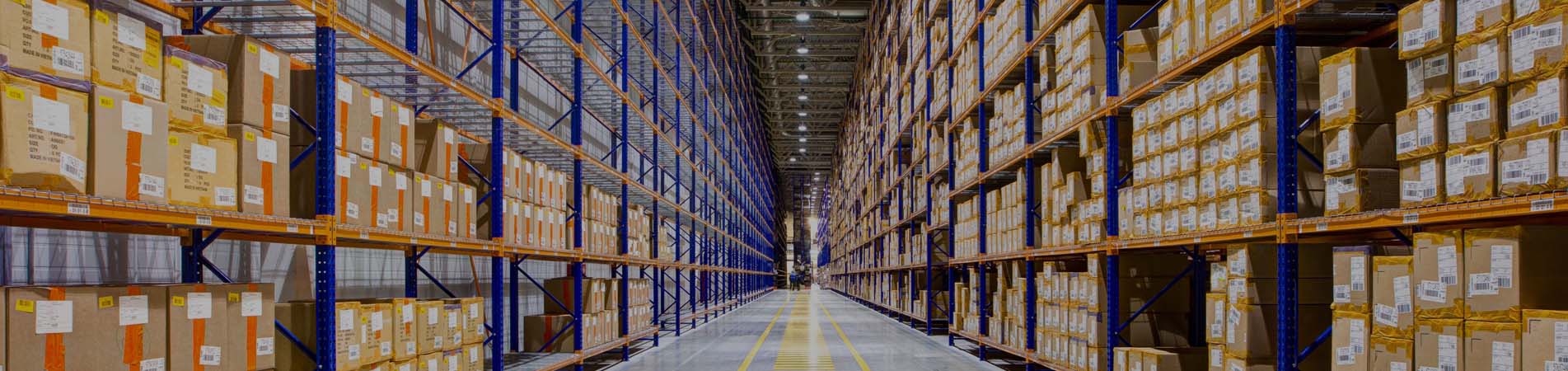
In Modern Warehouse Storage, Live storage play a crucial role in FMCG and Picking System. These Racking System design to high turnover goods. Among the various storage solutions available, pallet flow racking systems have emerged as a sophisticated and versatile option for warehouses dealing with high-volume, time-sensitive products. In live storage, carton flow racking, pallet flow racking, Which is the best system for your warehouse?
This article provides a comprehensive overview of pallet flow racking, their functions, characteristics, and tips for design pallet flow racking.
What Is a Pallet Flow Racking?
Pallet flow rack systems represent a sophisticated approach to warehouse storage, leveraging gravity to facilitate a seamless and organized inventory flow. At their core, these systems operate on the principle of "first-in-first-out" (FIFO), where pallets are loaded at one end of a rack lane and smoothly glide towards the other end for unloading.
Flow racking systems consist of very particular types of high-density racks: their components and structure leverage gravity to streamline all goods extraction and storage operations. These structures save time compared to traditional drive-in/drive-thru racks, as the fork trucks don't need to enter the lanes (gravity forces the products to slide forward towards the front of the racks).
The system incorporates strategically positioned skate wheels or rollers set on a gradual slope, typically at a 3% to 4% angle for pallets. This gravity-driven design ensures that when a pallet is removed from the front position, the remaining pallets automatically glide forward to fill the pick position, creating a continuous flow of inventory.
Key characteristics of pallet flow racking
Gravity-Driven Movement: Uses the natural force of gravity to move pallets through the system
FIFO Inventory Management: Ensures oldest stock is accessed first, critical for perishable goods
High-Density Storage: Maximizes warehouse space utilization through deep-lane storage
Controlled Speed Systems: Incorporates brake rollers and speed controllers for safe pallet movement
Dual-Aisle Operation: Typically requires separate loading and unloading aisles for optimal efficiency
Applications of Pallet Flow Racking
Pallet flow racking systems excel in specific warehouse environments and industry applications where their unique characteristics provide maximum benefit.
Industry Applications
Food and Beverage Industry
In the food and beverage industry, pallet flow rack systems are integral. The FIFO system ensures that perishable items are efficiently rotated, minimizing the risk of spoilage and contributing to effective inventory management. This application is particularly crucial for dairy products, fresh produce, and processed foods with specific expiration dates.
Medical and Pharmaceutical Supplies
Medical supplies often have time-sensitive characteristics, necessitating a controlled and organized inventory flow. Pallet flow racks provide the ideal solution for ensuring that medical products are readily accessible and properly managed. The FIFO system is essential for maintaining drug efficacy and regulatory compliance.
Cold Storage Facilities
For cold storage environments, where space optimization is paramount, pallet flow racks with their dense storage capabilities become indispensable. These systems not only maximize storage capacity but also contribute to maintaining an organized and efficient cold storage facility.
General Distribution Centers
In industries requiring swift and organized access to diverse products, such as general distribution, pallet flow racks prove invaluable. The efficient flow of goods ensures that the right products are readily available for distribution, enhancing overall operational efficiency in diverse and dynamic warehouse settings.
Operational Applications
High-Volume, Low-SKU Storage
Pallet flow rack systems are most commonly used for storing a large quantity of pallets of the same product or SKU. This makes them ideal for manufacturers and distributors who handle large quantities of uniform products.
Case-Pick Operations
Pallet flow racks are excellent for high-volume case-pick applications where workers manually select cases from the front pallet position while reserve pallets queue behind, ensuring continuous replenishment.
Interim Storage Areas
Especially in the case of flow racks with rollers and carton flow racks, they serve to connect the dispatch and storage areas by leaving the aisles free on both sides.
Temporary Storage and Staging
The systems work effectively as buffers for dispatches and production, particularly in staging areas where goods await shipment.
Structural Components of Pallet Flow Racking
Gravity Wheel and Roller Systems
What sets these flow storage systems apart is the incorporation of rollers or trolleys with bearings that facilitate the controlled movement of goods from one end of the channel to the other. The system uses two primary track configurations:
Individual Skate Wheels: In this track configuration, these wheels are strategically positioned to provide support to the strongest part of the pallets. This deliberate arrangement ensures a balanced and controlled flow as pallets traverse along the track.
Full-Width Steel Rollers: In this setup, these rollers are strategically positioned to support the entire width of the pallet. This design choice offers a broader surface for pallet movement, enhancing the adaptability of the system to various pallet types and sizes.
Inclination and Pitch
The inclination of the roller platforms can be personalized depending on the unit loads: it's usually set at a 3% to 4% angle for pallets, while it can be higher for boxes. The precise angle ensures optimal flow speed while maintaining control.
Safety Systems
Brake Rollers and Speed Controllers
Brake rollers: slow down the speed of the load depending on the force generated. The faster the acceleration, the greater the brake force. These components prevent pallets from moving too quickly and potentially causing damage or safety hazards.
Pallet Centralizers
Pallet centralizers: assist with pallet entries to ensure they fit perfectly in the channel. These guides help maintain proper pallet alignment throughout the flow process.
Ramp Stops and End Barriers
Ramp stops at the ends of the channels: reinforce this area to prevent it from giving way to the accumulated weight of the goods at the exit point.
Height and Capacity Considerations
Height Limitations
This isn't a storage system that stands out for its height, although it is possible to combine it with stacker cranes for pallets. To operate with these kinds of racks, manual handling equipment is normally used, limiting the height.
Space Efficiency Impact
Due to the inclination of this system, the pallet flow racks are taller than traditional high-density systems. What's more, the higher their levels, the greater the loss of storage space (which could even amount to an additional level).
Pallet Flow Racking vs. Selective Pallet Racking
Understanding the differences between pallet flow racking and conventional selective pallet racking is crucial for making the right choice for your warehouse.
Feature
Pallet Flow Racking
Selective Pallet Racking
Storage Density
Very high; stores pallets several deep in lanes
Lower; usually single or double deep
Inventory Rotation
FIFO (first-in, first-out)
Also supports FIFO but less efficient for large volumes
Space Utilization
Requires fewer aisles; maximizes storage footprint
Requires more aisles; less space-efficient
SKU Variety
Best for low SKU, high volume (one SKU per lane)
Accommodates many SKUs with 100% access
Cost
Higher initial cost due to complexity
More affordable and simpler to install
Loading/Unloading
Separate aisles for loading and unloading
Loading and unloading from the same aisle
Operational Efficiency
Higher productivity with less forklift travel
More forklift travel due to multiple aisles
Pallet flow racks excel in high-volume, low-SKU environments needing efficient FIFO rotation, while selective racks are better suited for operations with many SKUs requiring direct access to each pallet.
5 Tips for Pallet Flow Racking Layout
Implementing an effective pallet flow racking layout requires careful planning and consideration of multiple factors. Here are five essential tips for optimizing your system design:
Analyze Product Characteristics and Flow Patterns
Before designing your layout, conduct a thorough analysis of your product mix and movement patterns. Consider factors such as:
Product Velocity: Identify fast-moving versus slow-moving items
Seasonal Variations: Account for peak and off-peak demand periods
SKU Concentration: Determine which products have sufficient volume to justify deep-lane storage
Product Compatibility: Ensure products can be safely stored in flow systems
Focus on products with consistent, high-volume movement that benefit from FIFO rotation. Items with irregular demand patterns may be better suited for selective racking.
Optimize Lane Depth and Configuration
Determine the optimal lane depth based on your inventory turnover and space constraints:
Standard Depths: Most pallet flow systems accommodate 3-10 pallets deep
Turnover Rate: Higher turnover rates can support deeper lanes
Pick Frequency: Balance lane depth with picking efficiency
Safety Considerations: Ensure adequate visibility and access for operators
Consider mixed-depth configurations where different products may require varying lane depths based on their specific characteristics and demand patterns.
Plan Aisle Layout and Traffic Flow
Design your aisle configuration to maximize efficiency and minimize congestion:
Separate Loading and Unloading: Maintain distinct aisles for input and output operations
Traffic Direction: Establish clear traffic patterns to prevent conflicts
Emergency Access: Include safety aisles for emergency situations
Equipment Clearance: Ensure adequate space for your material handling equipment
Flow racking systems with rollers require two aisles: one to insert pallets into the corresponding channel and another to extract them. Thanks to this separation, incoming and outgoing traffic remains uninterrupted, while forklift operators gain in maneuverability. Plus, a safety aisle is usually included in the middle of the flow racking unit for use in an emergency.
Integrate with Material Handling Systems
Ensure your pallet flow racking layout works seamlessly with your existing and planned material handling equipment:
Forklift Compatibility: Verify that your equipment can efficiently service the rack configuration
Conveyor Integration: Plan for potential conveyor connections for enhanced automation
WMS Integration: Ensure your warehouse management system can effectively track inventory in flow systems
Future Expansion: Design with flexibility for future automation or system upgrades
Consider the turning radius, lift capacity, and operational requirements of your material handling equipment when determining aisle widths and rack positioning.
Implement Proper Safety and Maintenance Access
Design your layout with safety and maintenance requirements in mind:
Safety Clearances: Maintain proper clearances around all equipment and structures
Maintenance Access: Ensure maintenance personnel can safely access all system components
Load Testing Areas: Designate areas for system testing and calibration
Emergency Procedures: Plan for emergency evacuation routes and procedures
Include provisions for regular inspection and maintenance of rollers, brake systems, and structural components. Design maintenance schedules into your operational planning to ensure system reliability and safety.
Conclusion
Pallet flow racking systems represent a sophisticated solution for warehouses seeking to optimize storage density while maintaining efficient inventory flow. Their gravity-driven, FIFO design makes them particularly valuable for operations handling high-volume, time-sensitive products across industries such as food and beverage, pharmaceuticals, and cold storage.
At HEDA SHELVES, we specialize in OEM & ODM Service for your warehouse storager, tailored to meet demanding industrial applications. We have successfully delivered high-capacity pallet flow racking system for any warehouses. As 20+ years warehouse storage racking manufacturer, we promise the best design and layout to fit your needs and help you increase the warehouse capacity. Contact Us Today.