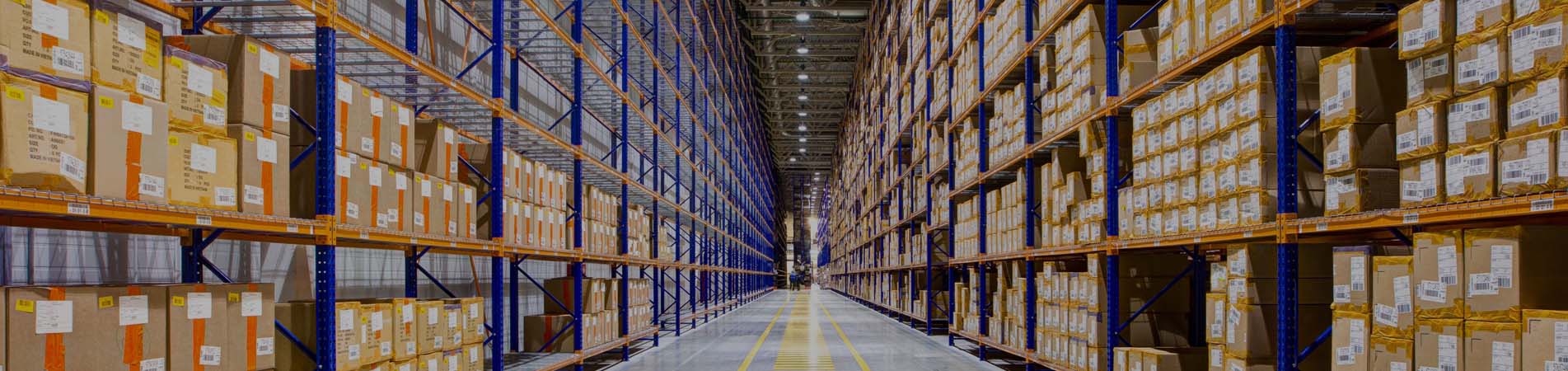
Choosing the right warehouse racking system can make or break your storage efficiency and operational costs. Whether you're expanding your current warehouse or designing a new facility, understanding the differences between drive-in racks, shuttle racking, and mobile racking is crucial for maximizing your investment.
What is Drive-In Racking?
Drive-in racking is a high-density storage system that allows forklifts to drive directly into the rack structure to store and retrieve pallets. This system operates on a Last-In-First-Out (LIFO) principle, making it ideal for storing large quantities of similar products with longer storage periods.
How Drive-In Racking Works
The system consists of continuous rails that support pallets at multiple levels. Forklifts enter the rack structure through entry points and travel along guide rails to place or retrieve pallets. The structural framework includes uprights, rails, and bracing that create drive lanes typically 10-12 feet wide.
Drive-in racks can be configured as either drive-in (single entry point) or drive-through (entry and exit points at opposite ends) depending on your operational requirements. The LIFO system means the last pallet stored is the first one retrieved, which works perfectly for products with longer shelf lives or seasonal inventory.
Key Features:
LIFO system (Last In, First Out)
Eliminates aisles between racks
Reduces pick faces by up to 75%
Cost-effective for high-volume, low-SKU operations
Requires specialized forklift training
What is Mobile Racking?
Mobile racking systems mount entire rack structures on motorized bases that move along rails. These systems eliminate fixed aisles by creating a single working aisle that moves between rack rows as needed.
How Mobile Racking Works
The system operates through electric motors, mechanical hand wheels, or hydraulic systems that move entire rack sections along rails embedded in the warehouse floor. When access is needed to specific products, the relevant racks separate to create a working aisle exactly where it's required.
Mobile racking systems can be configured with various control options, from simple mechanical systems to sophisticated computerized controls with safety sensors and automatic positioning.
Key Features:
Highest space utilization – up to 95% floor usage
Maintains 100% pallet selectivity
Reduces building footprint requirements
Energy-efficient motor systems
Ideal for slow-moving inventory
What is Shuttle Racking?
Shuttle racking represents the evolution of high-density storage into the semi-automated realm. This system combines the space efficiency of drive-in racking with radio-controlled shuttle cars that move pallets within the rack structure, eliminating the need for forklifts to enter the racking system.
How Shuttle Racking Operates
The shuttle system uses battery-powered carts that run on rails within each storage level. These shuttles are controlled via radio frequency and can move pallets deep into the rack structure. Forklifts only need to place pallets at the face of the rack and position the shuttle car at the appropriate level.
The shuttle car receives commands through a remote control or warehouse management system integration. It can operate in both FIFO (First-In-First-Out) and LIFO modes, providing flexibility that traditional drive-in racks cannot offer.
Key Features:
Semi-automated operation with remote control
FIFO (First In, First Out) or LIFO capability
Faster throughput than drive-in systems
Reduced product damage and forklift wear
Scalable automation levels
Key Difference for these racking system
Feature
Drive-In Racking
Shuttle Racking
Mobile Racking
Storage Density
High (60-75% floor usage)
High (65-80% floor usage)
Highest (85-95% floor usage)
Selectivity
Limited (LIFO only)
Good (FIFO/LIFO options)
Excellent (100% selectivity)
Operating Speed
Moderate
Fast
Slow to moderate
Investment Cost
Lowest
Moderate to high
Highest
Maintenance
Minimal
Regular (shuttle carts)
Moderate (motors/rails)
Product Damage Risk
Higher
Lower
Lowest
Automation Potential
None
High
Moderate
How to Choose the Right Dynamic Racking System
After two decades in this industry, I've developed a proven framework for making this critical decision:
1. Analyze Your Inventory Profile
High-volume, few SKUs: Drive-in racking excels
Medium variety, fast turnover: Shuttle racking wins
High variety, slow turnover: Mobile racking dominates
2. Evaluate Your Throughput Requirements
Low to moderate throughput: Drive-in works perfectly
High throughput needs: Shuttle racking delivers speed
Selective access priority: Mobile racking ensures 100% accessibility
3. Consider Your Budget Reality
Budget-conscious operations should start with drive-in racking. Growing businesses with increasing throughput demands benefit from shuttle systems. Premium operations requiring maximum space efficiency justify mobile racking investments.
4. Assess Your Labor Situation
Experienced forklift operators: Drive-in systems work well
Labor shortage concerns: Shuttle racking reduces operator dependency
Minimal daily activity: Mobile racking handles low-frequency access efficiently
Practical Examples
Case Study 1: Cold Storage Facility
A frozen food distributor with limited SKUs but massive volumes chose drive-in racking. Result: 40% increase in storage capacity with minimal investment. The LIFO system worked perfectly for their product rotation needs.
Case Study 2: E-commerce Fulfillment Center
An online retailer with 200+ SKUs and daily picking requirements implemented shuttle racking. Outcome: 60% faster throughput and 30% reduction in product damage compared to their previous drive-in system.
Case Study 3: Pharmaceutical Warehouse
A pharmaceutical company with strict FIFO requirements and premium real estate costs chose mobile racking. Achievement: 90% floor utilization while maintaining complete lot traceability and access to every pallet.
Making Your Final Decision
The best racking system isn't always the most expensive or technologically advanced – it's the one that perfectly matches your operational needs. Here's my expert recommendation process:
Start with drive-in racking if you're dealing with high-volume, low-variety inventory and have budget constraints. It's the proven workhorse of high-density storage.
Upgrade to shuttle racking when throughput becomes your bottleneck and you need faster, safer operations. The automation capabilities make it future-ready for growing businesses.
Invest in mobile racking when space is your most expensive resource and you need maximum flexibility with complete selectivity.
Conclusion
After 20 years of helping businesses optimize their warehouse operations, I can confidently say there's no universal best choice – only the best choice for your specific situation. Drive-in racking offers unbeatable value for simple, high-volume storage. Shuttle racking delivers the perfect balance of density, speed, and automation. Mobile racking provides ultimate flexibility for complex inventory management needs.
If you plan on set up a warehouse for new business like retail, wholesale,logistic and more, choose a trustworthy racking system manufacturer is essential. Heda Shelves is leading warehouse racking system factory in China since 2001. We Offer OEM&ODM Service for your storage needs in factory price. Contact us Today.
FAQ
Q: Can I mix different racking systems in the same warehouse?
A: Absolutely! Many of my clients use hybrid approaches – drive-in for fast-moving bulk items, mobile for slow-movers, and shuttle for medium-velocity products.
Q: Do I need special forklifts for these systems?
A: Drive-in requires reach trucks or specialized narrow-aisle forklifts. Shuttle and mobile systems work with standard counterbalance forklifts.
Q: How do I handle maintenance for automated systems?
A: Shuttle systems require scheduled maintenance contracts with manufacturers. Mobile systems need regular rail cleaning and motor servicing, typically manageable in-house.
Are you limited in warehouse racking space? Or low storage efficiency? Many people believe that designers create high-density pallet racking solely for large warehouses. That's not the truth, every storage space can benefit from high-density racking optimization
This guide helps businesses understand, use, and benefit from high-density racking systems. It provides the knowledge needed for success.
What Is a High-Density Storage System, and How Does It Work?
High-density storage condenses stored items into a smaller area, helping businesses utilize space efficiently. It has important benefits compared to static shelving and cabinets. It provides the same storage capacity but uses 40-80% less space.
Reduce Extra Aisle: High-density systems bring shelves together, reducing aisle space and maximizing floor area.
Flexibility with Different Configurations: Businesses can choose from various options based on inventory type and size.
High-density storage can save space. This is true for both small businesses and large logistics companies. In a small warehouse, organize limited floor storage or low warehouse height, getting a compact racking system is substantial such as Drive-in or Drive-thur Racking or flow racking. On the other hand, As inventory needs expand, high-density storage can be scaled and adapted to fit more products without needing additional square footage.
Benefit of High Density Storage System
High-density storage systems are a game-changer for industrial warehouses. They offer numerous advantages that can transform how efficiently warehouses operate.
Maximized Space Utilization
High-density systems allow warehouses to store significantly more inventory within the same footprint. By reducing or eliminating aisle space and stacking items vertically, these systems can increase storage capacity by up to 50%. This means a higher volume of products can be housed in a smaller area, which is particularly valuable for warehouses with space constraints.
Improved Operational Efficiency
With high-density storage, inventory retrieval times are faster, which streamlines the picking and restocking processes. Many high-density systems, like pallet flow and push-back racking, allow for more efficient inventory access. As a result, workers spend less time navigating through aisles, which enhances workflow and productivity.
Cost Savings on Facility Expansion
By optimizing existing space, high-density storage systems often reduce the need for additional warehouse space. This can lead to substantial cost savings by eliminating the need for facility expansions, renting additional warehouses, or relocating to larger facilities. For many industrial warehouses, this means maximizing their current investment and keeping costs under control.
Enhanced Inventory Management
High-density storage systems often use organized, compartmentalized layouts that make inventory tracking and management simpler. With systems like mobile racking and pallet shuttle solutions, businesses can streamline inventory access and track products more effectively, reducing the chance of misplaced or lost items.
Flexibility to Accommodate Different Inventory Types
High-density storage can support a wide range of inventory configurations, from FIFO (First In, First Out) to LIFO (Last In, First Out) systems. This flexibility is crucial for industrial warehouses handling diverse inventory with varying rotation needs. For example, pallet flow racking suits fast-moving inventory, while drive-in racking works well for low-rotation items.
Improved Safety and Reduced Product Damage
Many high-density storage systems are designed to secure products safely in place, reducing the risk of accidents or damage during retrieval. By providing a stable structure, these systems minimize handling errors and ensure that products are stored securely, helping to avoid costly damages.
Environmental Impact Reduction
By storing more goods in a smaller footprint, high-density storage systems contribute to reduced energy usage. Fewer expansions or additional facilities mean lower energy consumption, making these systems an eco-friendly option for industrial warehouses aiming to reduce their carbon footprint.
Better Organization and Enhanced Accessibility
High-density storage solutions help warehouses stay organized by reducing clutter and keeping everything in designated locations. Some systems, like mobile racking, allow selective access, which keeps the warehouse orderly and ensures employees have easy access to the necessary items when needed.
What is high-density pallet racking?
High-density pallet racking is racking which is designed to use the available space as efficiently as possible. It includes a variety of formats which are configured in a way that allows more pallets or items to be stored in a smaller area. Depending on the format, this can require changes in how the space is used and the pallets are accessed, such as the use of specialised forklifts. High-density pallet racking options include:
Double deep racking
Drive-in pallet racking
Narrow aisle racking
Push back pallet racking
Pallet shuttle racking
High-density racking systems are engineered to take full advantage of the available space by storing numerous pallets in a smaller area. These systems are characterized by their ability to store pallets in deep lanes, usually, 3-5 pallets deep, and are ideal for storing large volumes of similar products. Various high-density storage systems include drive-in racks, push-back racks, and mobile racking systems.
Drive-in racks, for instance, are a type of high-density storage system that allows pallets to be stored on rails in deep lanes, with each pallet stored in front of one other. This provides a high storage capacity in a small area, making it the ideal solution for companies that need to store a large number of comparable products.
Push-back racks, on the other hand, are high-density storage system that allows pallets to be stored on inclined rails in deep lanes. Pallets are loaded onto the system from the front and are stored behind one another, with each pallet pushing the one in front of it back as it is loaded. This configuration enables a high storage capacity in a small area, making it an excellent option for businesses that need to store many similar items.
High selectivity racking systems, in contrast, are designed to provide easy access to a wide variety of products. These systems are characterized by their ability to store pallets in shallower lanes, usually, 1-2 pallets deep, and are ideal for storing a variety of distinct products. Examples of high-selectivity storage systems include selective pallet racks, cantilever racks, and mezzanine systems.
Selective pallet rack, for example, is a type of high-selectivity storage system that allows pallets to be stored on horizontal beams in shallower lanes. This provides easy access to any pallet on the system, making it an excellent option for businesses that need to store a variety of different products.
Cantilever rack, on the other hand, is a high-selectivity storage system that allows long, bulky items such as pipes, lumber, or furniture to be stored on arms that extend out from a vertical column. This arrangement provides easy access to any item on the system, making it an ideal solution for businesses that need to store long, bulky items.
These racking formats are often characterised by a unique approach to storage and retrieval. For instance, pallet shuttle racking uses motor-assisted shuttles to deliver pallets to the back of the racking, while drive-in pallet racking allows forklifts to (as the name suggests) drive into alcoves in the racking in order to place and retrieve pallets.
Why Should I Choose Heda Shelves for My High-Density Storage Solution?
Heda Shelves, a leading high-density storage racking manufacturer in China. We offer a wide range of industrial storage solutions to meet all of your needs. The high-density systems we provide accommodate the first in, first out (FIFO) and last in, last out (LIFO) flows.
If you’re moving into a new warehouse or need to upgrade your current capacity, contact our expert for free layout with high-density racking system.
FAQ
How Does Pallet Flow Racking Maximize Space in My Warehouse?
Pallet flow racking is a high-density storage solution that maximizes warehouse space by allowing for more product storage in a compact footprint. This design reduces the travel distance for forklifts, as pallets are loaded on one side and flow naturally to the opposite side for unloading. This streamlined flow minimizes forklift congestion, making warehouse operations more efficient and enhancing overall space utilization.
When Should I Consider Drive-In Racking for My Warehouse?
Drive-in racking is an ideal choice for warehouses with low product rotation, especially for companies storing non-perishable items or products without early expiry dates. This type of racking allows forklifts to drive directly into the rack structure, enabling deep storage in each aisle. Drive-in systems are best for inventory that doesn’t require regular access and can remain in storage for extended periods.
Is Push-Back Racking Right for My Warehouse Inventory?
Push-back racking combines the benefits of high-density and selective storage. It can provide two to three times more storage space than standard selective racks, making it a suitable option for inventory that follows the LIFO (Last In, First Out) method. Additionally, push-back racking is low-maintenance; forklifts don’t enter the rack, minimizing damage to uprights.
Push-back systems also incorporate safety features like load control and braking mechanisms, which enhance safety in shuttle and roller systems. With high compaction and robust design, push-back racking is compatible with other adjustable pallet systems, making it ideal for cold storage facilities, where compact, durable racking is essential for efficient space use and cost savings.
What Is Mobile Racking, and How Can It Optimize My Storage Space?
Mobile racking is a flexible storage system that allows racks to move along rails, creating aisles only as needed. Unlike traditional static racks, mobile racking systems offer a dynamic, space-saving solution that increases storage capacity by eliminating fixed aisles.
The system consists of racking units mounted on movable bases, which can be controlled manually or electronically. Mobile racking is perfect for warehouses with a low SKU variety but a high volume of each SKU. This setup optimizes space by maximizing every available inch while keeping operations smooth and organized, making it an excellent option for facilities aiming to maximize storage capacity without expanding physical space.