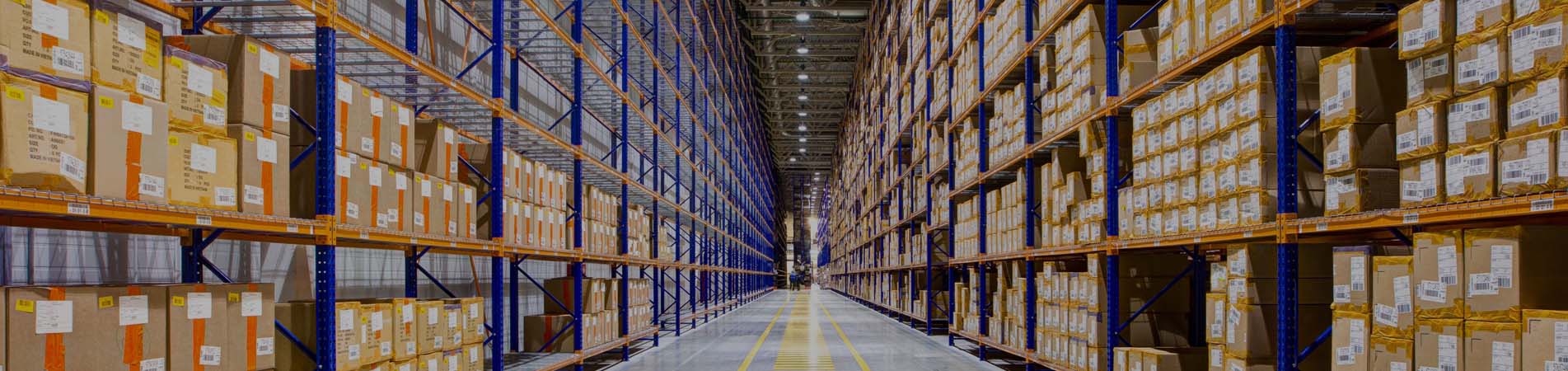
In warehouse and inventory management, the choice of a storage system is a foundational decision that profoundly impacts operational efficiency, safety, and profitability. For warehouse owners, purchasers, and logistics professionals, the debate between pallet racking and block stacking is not merely about stacking pallets; it is a critical evaluation of long-term viability.
This guide dissects the core principles, advantages, and limitations of each method, providing a framework for a discerning choice.
What is Block Stacking?
Block stacking is the most fundamental storage method, leveraging a warehouse's floor space without the need for a structural framework. Loaded pallets are placed directly on the floor and stacked on top of one another, forming dense, multi-pallet rows or "blocks." This system is predicated on a Last-In, First-Out (LIFO) inventory model, where the last pallet placed in a lane is the first one retrieved.
LIFO Principle: Block stacking is inherently a LIFO system. Pallets at the front of a lane must be removed before those at the back can be accessed. This makes it a viable solution for products that do not have a limited shelf life or are consistently high-volume.
Space Utilization: By eliminating the need for aisles between every pallet, block stacking can achieve high horizontal storage density. However, this method sacrifices verticality, as stacking height is limited by the crush strength of the products and the stability of the stack itself.
What is Pallet Racking?
Pallet racking is a highly engineered storage system that uses steel uprights and horizontal beams to create a multi-level structure for storing palletized goods. It elevates pallets off the floor, allowing for organized, vertical storage. The versatility of pallet racking is unmatched, with multiple configurations available to address a variety of operational requirements and inventory management strategies.
Selective Access: The most common form, selective pallet racking, provides direct access to every single pallet. This is its most powerful advantage, enabling a First-In, First-Out (FIFO) system and facilitating the management of a diverse range of SKUs.
Verticality: Racking systems are built to utilize the full height of a warehouse, often allowing for stacks of four or more pallets high. This maximizes cubic space and can dramatically increase storage capacity without expanding the facility's footprint.
Block stacking and pallet racking is different methods for warehouse storage, block stacking storage any product by pallet lay on the floor, pallet racking store the inventory on the racking in horizontal space, weight capacity depend on beams, also called as beam racking.
Feature
Block Stacking
Pallet Racking
Initial Cost
Very Low
High
Space Utilization
High horizontal density; poor verticality
High vertical density; requires aisles
Accessibility
Poor; LIFO system with "honeycombing"
Excellent; 100% selectivity (e.g., selective racks)
Product Protection
Limited; risk of crushing from stack weight
High; weight is supported by the rack structure
Safety
Lower; risk of stack collapse and tipping
Higher; stable, engineered structure
SKU Management
Best for a low number of uniform SKUs
Ideal for a high number of diverse SKUs
Flexibility
Layout can be easily changed
Layout is fixed; system is versatile for different types
How to Choose the Right Pallet Racking
Pallet racking is not a monolith. The term encompasses a serises of rack systems designed for specific applications, a nuance that discerning professionals must appreciate. The selection process is less about opinion and more about a methodical assessment of your unique business environment.
Selective Racking: This is the most common type and the industry standard. It offers direct access to every pallet, making it ideal for warehouses with a high number of SKUs and a need for a FIFO system.
Drive-In/Drive-Thru Racking: These high-density systems are ideal for large quantities of a single SKU. They minimize aisle space, allowing forklifts to drive directly into the rack to load and retrieve pallets. Drive-In systems are LIFO, while Drive-Thru systems, which are accessible from both ends, can be used for FIFO.
Push-Back Racking: This system combines density with improved selectivity. Pallets are placed on nested carts that "push back" the previous pallet, creating a LIFO system. It offers a good balance between high-density storage and reasonable accessibility.
Pallet Flow Racking: Also known as gravity flow racking, this system is a dedicated FIFO solution. Pallets are loaded from one aisle and roll on inclined rollers to the picking aisle on the other side. This is perfect for perishable goods or products with strict expiration dates.
Conclusion
Looking for high efficiency storage solution for your warehouse or other commercial storage project? Pallet Racking System is a flexible storage solution for any sector, like retail trade, cold storage, dry warehouse, distribution centers. At HEDA SHELVES we supply, install and inspect warehouse racking in worldwide.
As a pallet racking manufacturer, HEDA SHELVES offers racking system with high durability, excellent safety features, long lifespan, and wide compatibility. What’s more, at HEDA SHELVES, you can customize the industrial pallet racking according to your storage specifications and wishes as we provide OEM/ ODM customization services. Finding a cost-efficiency storage racking solution? Contact us here! We’ll be happy to help you choose and design the warehouse pallet racking that best suits your specific needs.
Frequently Asked Questions
Q: What are the typical height limitations for block stacking?
A: Block stacking height depends on pallet strength and product stability, typically ranging from 3-6 pallets high for standard applications. Load-bearing capacity calculations and safety regulations determine maximum safe stacking heights.
Q: How do insurance costs differ between racking and block stacking?
A: Pallet racking systems often qualify for reduced insurance premiums due to improved safety standards and fire suppression accessibility. Block stacking may incur higher coverage costs due to increased damage risks and emergency access limitations.
Q: What maintenance requirements apply to pallet racking systems?
A: Pallet racking requires regular inspections every 6-12 months, load capacity verification, and structural integrity assessments. Maintenance costs typically represent 2-3% of initial investment annually.