what are you looking for?
When a warehouse handles hundreds of product references, different pallet sizes, and frequent inbound and outbound operations, the storage system needs to do more than simply hold inventory. Warehouse teams also need to locate specific products quickly, access individual pallets without moving other loads, and adjust storage positions as inventory changes.
Selective pallet racking is one of the most widely used warehouse storage systems for these requirements. It provides direct forklift access to individual pallet positions, making it a practical choice for distribution centers, manufacturing facilities, wholesale warehouses, and businesses managing a wide range of SKUs.
For warehouse operators planning a new facility or upgrading an existing storage area, understanding how selective pallet racking works—and when it is the right choice—can help prevent costly layout changes later. HEDA Shelves provides configurable pallet racking solutions designed around warehouse dimensions, pallet loads, and material-handling requirements.
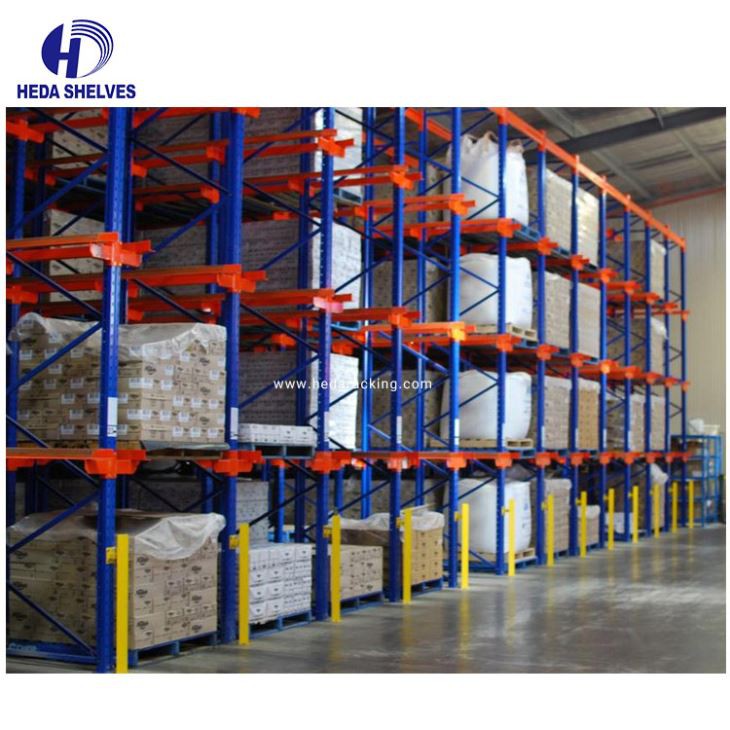
Selective pallet racking installation for organized pallet storage and direct product access.
Selective pallet racking is a steel storage system that allows warehouse operators to access each pallet directly using a forklift. The standard structure consists of vertical upright frames, horizontal load beams, and connecting components. Pallets are placed on the beams in individual storage positions, usually arranged in single-deep rows.
Unlike high-density systems where pallets are stored several positions deep, selective racking does not require operators to move one pallet to reach another. Each pallet has its own accessible location along the aisle.
This arrangement is particularly useful for warehouses with many SKUs, mixed product batches, or frequent picking requirements. It also allows beam levels to be adjusted when pallet heights or storage needs change, subject to the rack's engineered configuration.
In the industry, selective pallet racking is also commonly referred to as adjustable pallet racking (APR). Both terms generally describe a pallet storage system with adjustable beam levels and direct access to individual pallet positions.
HEDA's Selective Pallet Rack System is designed for flexible warehouse storage, with configurable dimensions, levels, and finishes to suit different project requirements.
The operating principle is straightforward. A forklift travels along the working aisle, approaches the required rack bay, and places or retrieves a pallet from the designated beam level. Other pallets in the same row do not need to be moved first.
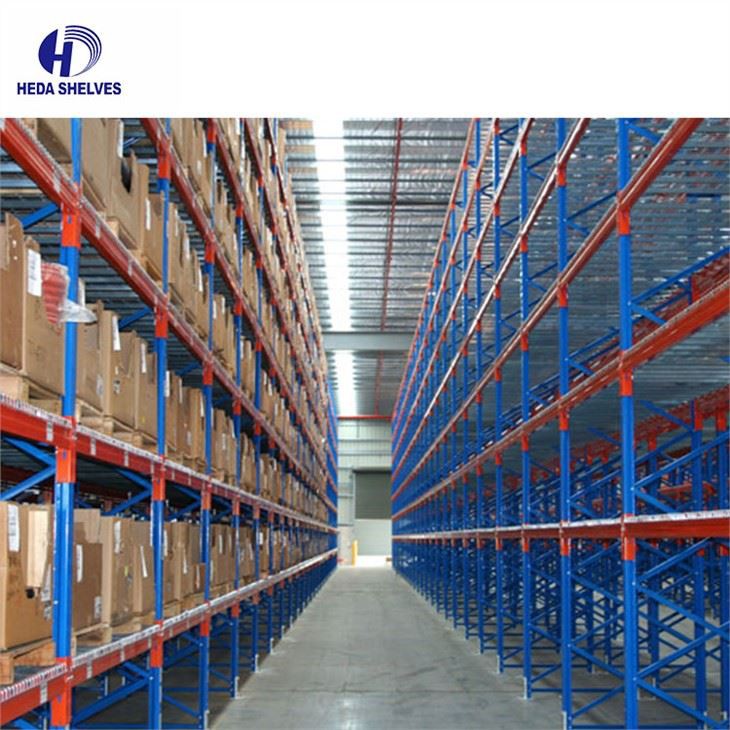
Wide working aisles provide forklift access to individual pallet locations.
A typical selective pallet racking layout includes the following components:
Because the system is modular, warehouse managers can plan different bay widths, rack heights, and beam elevations around their pallet dimensions and handling equipment. The final configuration should always be checked against the actual load requirements and applicable warehouse safety standards.
Selective pallet racking remains a common warehouse choice because it balances accessibility, operational flexibility, and relatively straightforward installation. Its main advantages are especially relevant to businesses that handle varied inventory rather than large quantities of only a few products.
Direct access to every pallet
Each pallet position can be reached independently. Operators do not need to relocate front pallets before retrieving stock stored behind them. This can reduce unnecessary handling and make order picking more straightforward.
Suitable for a wide range of SKUs
Warehouses storing different product models, batches, packaging types, or customer orders can assign separate pallet positions to individual references. This makes inventory identification and location management easier.
Adjustable storage levels
Beam heights can be changed to accommodate different pallet heights, provided the revised arrangement remains within the rack's approved design and load limits. This is useful when product dimensions change or a warehouse introduces new inventory categories.
Flexible warehouse operations
Selective racking can support receiving, put-away, replenishment, picking, and dispatch activities. It can also be integrated into different warehouse layouts, including back-to-back rack rows and single-row configurations.
Relatively straightforward installation and expansion
The modular frame-and-beam structure makes it possible to add bays or extend rack rows when warehouse requirements grow. Any expansion should be reviewed to confirm floor capacity, rack stability, aisle clearance, and structural compatibility.
For businesses handling heavy palletized inventory, HEDA also offers Heavy Duty Warehouse Racking options that can be configured according to the required storage load and warehouse layout.
Selective pallet racking is most suitable when easy access to individual pallets is more important than achieving the highest possible storage density. The following warehouse conditions are strong indicators that this system may be a good fit.
Warehouses with a high number of SKUs
If your warehouse stores many product references with relatively small quantities per SKU, selective racking makes it easier to allocate and retrieve individual pallet positions. It is particularly useful for distributors, wholesalers, and spare parts warehouses where inventory variety is high.
Operations with frequent pallet picking
Distribution centers and order fulfillment warehouses often need to retrieve different products throughout the day. Direct access to each pallet can reduce extra forklift movements and simplify picking operations.
Warehouses storing mixed pallet sizes
When pallet dimensions and product heights vary, adjustable beam levels offer more flexibility than fixed-level storage systems. Rack bays can be planned around the actual pallet footprint and load profile rather than relying on one standard product size.
Facilities with changing inventory requirements
Businesses that introduce new products, change packaging, or experience seasonal demand may benefit from a storage system that can be reconfigured. Selective racking provides more flexibility for these changes, although any beam adjustment must follow the rack manufacturer's loading and installation guidance.
Warehouses that prioritize stock visibility and location control
When each pallet has a clearly assigned storage position, warehouse teams can connect rack locations with barcode systems, warehouse management software (WMS), and inventory records. The rack structure itself does not manage stock rotation, but it provides an accessible physical layout for accurate inventory control.
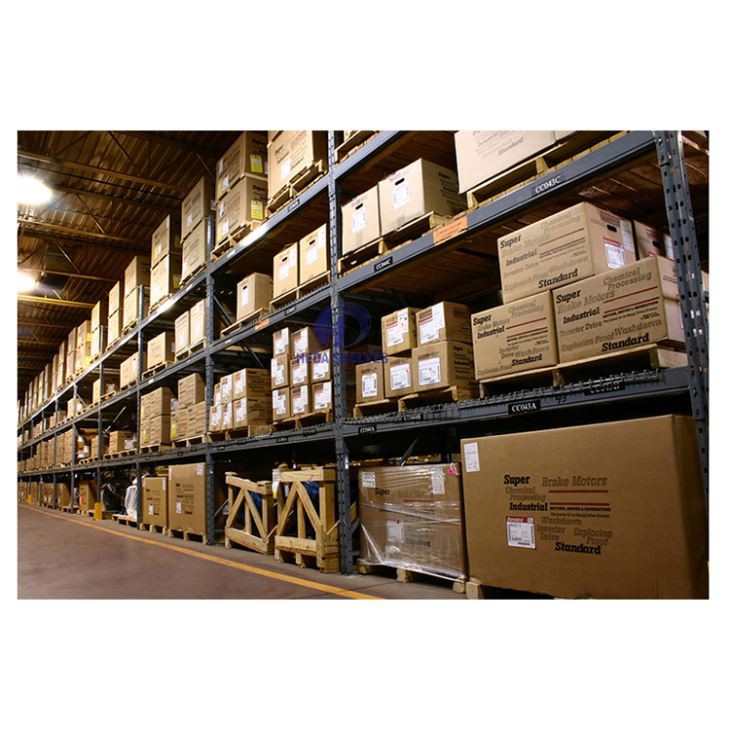
Industrial pallet storage helps organize packaged goods and warehouse inventory.
Yes, selective pallet racking can be used in FIFO (First In, First Out) inventory operations, but the rack configuration and warehouse workflow need to be planned correctly.
FIFO means that the oldest inventory is picked or dispatched first. A standard single-deep selective rack gives direct access to every pallet, so operators can select the correct batch based on its receipt date, expiry date, or inventory record.
However, direct pallet access alone does not automatically enforce FIFO. Warehouse staff still need to follow clear stock rotation rules, use accurate location records, and manage batch identification. Where a strict physical FIFO flow is required, a system with separate loading and picking sides—such as suitable drive-through or flow-through configurations—may be more appropriate.
For products with expiry dates, such as food, beverages, and certain chemical materials, the warehouse layout should be designed around the actual stock rotation process rather than assuming that every pallet rack automatically provides FIFO handling.
Selective pallet racking and drive-in racking are both used for palletized goods, but they solve different storage problems. The main difference is the balance between pallet accessibility and storage density.
| Comparison | Selective Pallet Racking | Drive-In Racking |
|---|---|---|
| Pallet access | Direct access to each pallet | Access through storage lanes |
| Storage density | Moderate; requires working aisles | Higher; reduces the number of aisles |
| SKU variety | Well suited to many SKUs | Best for fewer SKUs with larger quantities |
| Pallet retrieval | Individual pallet selection | Pallets within a lane are handled in sequence |
| Forklift operation | Works with suitable conventional forklift types | Forklift must enter storage lanes |
| Typical application | Distribution and mixed-inventory warehouses | Bulk storage of similar products |
If your warehouse stores large quantities of the same product and space utilization is the main concern, HEDA Drive-In Racking may be worth considering. It reduces the need for multiple working aisles by allowing forklifts to enter the storage lanes, but it requires a different operating method and inventory strategy.
In practical terms, choose selective racking when operators need to reach different pallets frequently. Consider drive-in racking when inventory is more homogeneous and increasing pallet density is a higher priority than accessing every pallet independently.
Choosing the right rack system involves more than comparing the price of individual frames and beams. A suitable design should reflect the warehouse's physical conditions, inventory characteristics, and daily material-handling process.
Warehouse dimensions and clear height
Measure the available floor area, ceiling height, columns, doors, sprinkler systems, lighting, and other building restrictions. These details affect the number of rack rows, storage levels, and aisle arrangements that can be installed.
Pallet dimensions and maximum load weight
Provide the length, width, height, and maximum gross weight of a fully loaded pallet. The design should account for the heaviest expected unit load, not just the average pallet weight.
Forklift type and working aisle width
Different forklifts require different operating clearances. Counterbalance forklifts, reach trucks, and narrow-aisle equipment have different turning and lifting requirements. The aisle width must be determined from the actual truck specifications and operating conditions.
Required pallet positions
Estimate current storage demand and future growth. A layout designed only for today's inventory may become inefficient if the business adds product lines or increases stock levels.
Rack load capacity and structural safety
Beam capacity and upright frame capacity are not interchangeable. The final design must consider beam span, beam levels, frame height, load distribution, connection details, floor conditions, and relevant local regulations. Never assume that a rack's load rating remains the same after changing its dimensions or configuration.
Accessories and protection
Depending on forklift traffic and pallet conditions, the system may need wire mesh decking, pallet supports, column guards, row spacers, safety locks, or end barriers. These components should be selected according to the actual risks and operating environment.
A warehouse racking project should begin with the way goods are stored and moved, not simply with a standard rack size. HEDA Shelves provides warehouse storage rack solutions with configurable dimensions, materials, colors, and layouts for different industrial applications.
For a selective pallet racking project, the design process can take into account:
HEDA's warehouse pallet racking solutions are manufactured with configurable specifications for different storage requirements. The company also provides related heavy-duty storage products for warehouses and industrial facilities.
To review the available configurations, visit the Warehouse Pallet Racking System page or contact HEDA with your warehouse and pallet information for a project-based recommendation.
What is selective pallet racking used for?
Selective pallet racking is used to store palletized goods while providing direct forklift access to each pallet position. It is commonly used in distribution centers, manufacturing warehouses, wholesale facilities, and warehouses with a wide range of SKUs.
Does selective pallet racking provide 100% pallet selectivity?
Yes. In a standard single-deep configuration, each pallet can be accessed individually without moving another pallet first. This is why selective racking is described as a 100% selective pallet storage system.
Is selective pallet racking the same as adjustable pallet racking?
In most warehouse applications, the terms refer to the same basic system. Both describe pallet racking with adjustable horizontal beams that can be repositioned to accommodate different pallet heights and storage requirements.
Is selective pallet racking suitable for small warehouses?
It can be suitable for small warehouses if the building has enough space for rack rows and forklift aisles. The layout should be checked against the required pallet capacity, available floor area, and handling equipment before installation.
Does selective pallet racking support FIFO?
It can support FIFO inventory management because every pallet is individually accessible. However, FIFO depends on the warehouse's stock rotation rules, pallet identification, and operating procedures. The rack alone does not automatically enforce FIFO.
What is the difference between selective and drive-in pallet racking?
Selective racking provides direct access to each pallet and is better suited to warehouses with many SKUs. Drive-in racking stores pallets in deeper lanes, increases storage density, and is generally more suitable for larger quantities of fewer product types.
How wide should the aisle be for selective pallet racking?
There is no single aisle width for every selective rack installation. The required clearance depends on the forklift model, turning radius, pallet dimensions, load size, and warehouse operating conditions. Always confirm the aisle width with the equipment supplier and rack designer.
Can selective pallet rack beam levels be adjusted?
Yes. Beam levels can generally be repositioned to accommodate different pallet heights. Any adjustment must follow the manufacturer's instructions and the approved rack loading configuration. The rack should be inspected after changes.
How much weight can selective pallet racking hold?
Load capacity depends on the beam span, steel profile, upright frame design, rack height, number of levels, and load distribution. A project-specific structural calculation is required to determine the safe working load. Buyers should request clearly documented beam and frame load ratings.
What information is needed to request a selective pallet racking quotation?
Prepare the warehouse dimensions, pallet size, maximum loaded pallet weight, required pallet positions, preferred rack height, forklift type, and any special storage conditions. These details help the manufacturer develop a more accurate layout and quotation.
Selective pallet racking is a practical solution when your warehouse needs direct access to individual pallets, flexible storage levels, and efficient handling of different SKUs. The best configuration depends on your pallet loads, warehouse dimensions, forklift equipment, and inventory turnover.
HEDA Shelves can help you evaluate your storage requirements and develop a pallet racking layout for your facility. Share your warehouse drawings, pallet specifications, and target storage capacity to discuss a suitable solution.


Hi! Click one of our members below to chat on